July 16, 2026
Choosing the Right Machine Starts With the Job
If you’re comparing a skid steer vs. mini excavator, the right choice usually comes down to what you need to accomplish first. Are you digging a trench, grading an open area, clearing vegetation, lifting materials, or cleaning up debris?
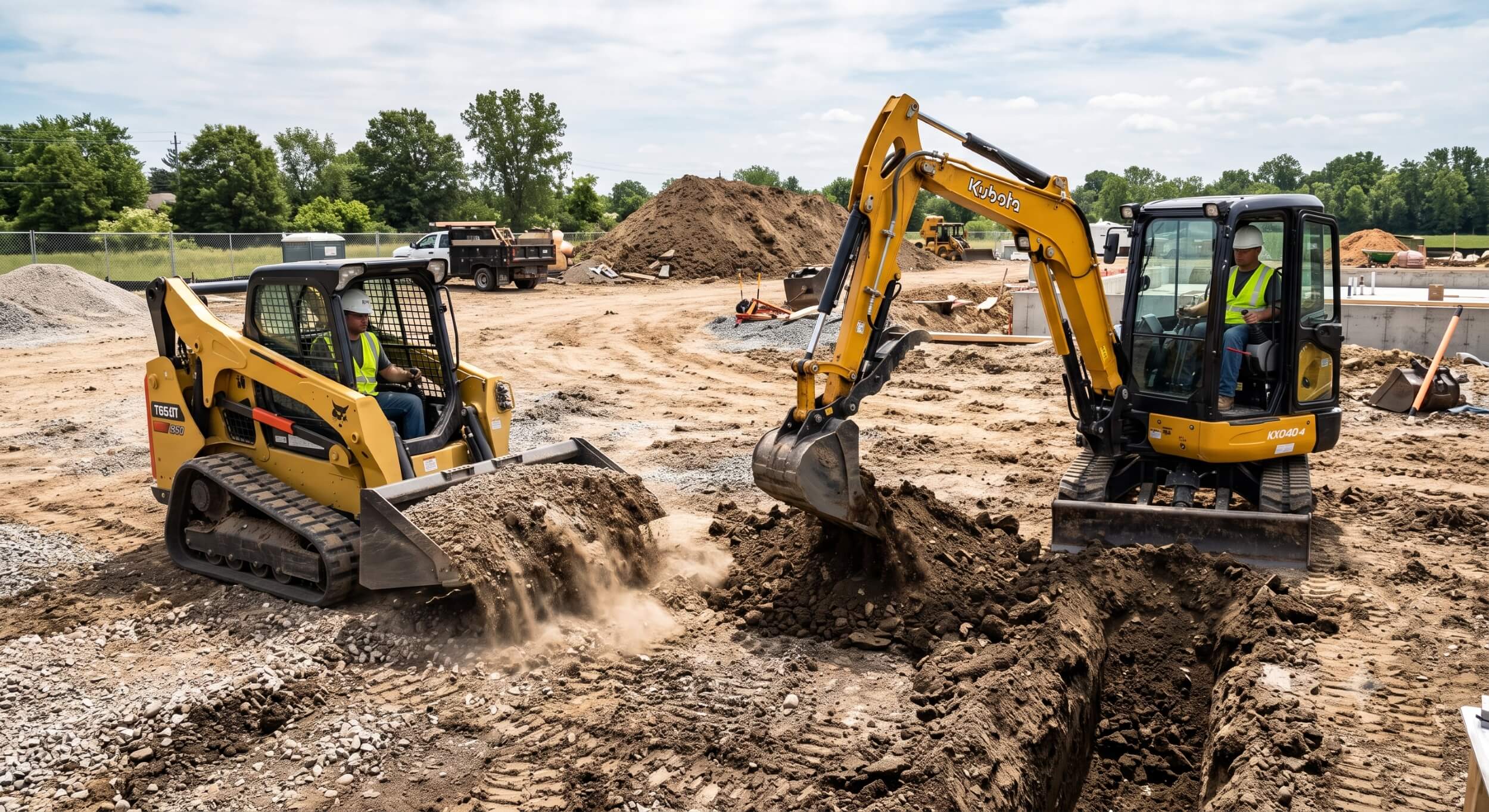
Both machines are useful, but they are not interchangeable for every project. A skid steer is generally better at moving, carrying, loading, and spreading material, while a mini excavator provides greater control for digging, trenching, and reaching below ground level.
Instead of choosing the machine that appears more powerful or versatile, start with the main task that needs to be completed. That will help you rent equipment that can perform the work efficiently without paying for more machine than the project requires.
Quick Answer: Skid Steer or Mini Excavator?
| Project Need | Better Rental Choice | Why |
| Digging trenches | Mini excavator | Offers more precise digging and better depth control |
| Moving dirt, gravel, pallets, or debris | Skid steer | Better suited for loading, carrying, and relocating material |
| Grading a driveway or open area | Skid steer | Spreads and levels material efficiently across larger areas |
| Digging footers or drainage lines | Mini excavator | Provides better reach, visibility, and control |
| Clearing brush or small debris | Depends on the material | A skid steer can move debris, while a brush cutter may be better for vegetation |
| Working through narrow backyard access | Mini excavator or compact skid steer | The best fit depends on gate width, terrain, and machine dimensions |
| Cleaning up a jobsite | Skid steer | Bucket work makes collecting and moving debris faster |
| Removing a stump | Stump grinder or mini excavator | The right choice depends on whether the stump must be ground down or pulled out |
| Digging a long, narrow utility line | Trencher | Creates a more consistent trench with less unnecessary excavation |
When to Rent a Skid Steer
A skid steer is usually the better choice when a project involves moving, lifting, loading, spreading, or cleaning up material. Its front bucket allows the operator to scoop material, carry it across the work area, and place it where it is needed.
Yesco’s skid steer rentals in Panama City include compact tracked machines suited for landscaping, property improvements, site preparation, and construction work. Their compact footprints can also make them useful in areas where a full-size loader would be difficult to maneuver.
Projects That Are Well Suited for a Skid Steer
A skid steer may be the better rental for:
- Spreading gravel, sand, mulch, or fill dirt
- Grading driveways and open work areas
- Moving materials around a jobsite
- Carrying dirt, broken concrete, or landscaping debris
- Loading material into a trailer or disposal pile
- Preparing areas for landscaping or hardscaping
- Cleaning up after light demolition
- Moving pallets with a compatible fork attachment
- Completing general property cleanup
A skid steer can often perform several of these tasks during the same rental period. For example, it can help remove loose material, bring in new fill, spread gravel, and clean up the remaining debris without requiring a different machine for each step.
Can You Dig With a Skid Steer?
Yes, you can dig with a skid steer. A standard bucket can scrape away soil, remove shallow layers, dig into loose material, and help create basic depressions or rough grades. With a compatible attachment, a skid steer may also handle certain trenching or auger work.
However, the answer to “can a skid steer dig?” depends heavily on the type of digging involved. A skid steer is not normally the best choice for a deep, narrow, or carefully controlled excavation. Its bucket approaches the ground from the front, which can require a wider working area and remove more soil than necessary.
For drainage lines, footers, deeper excavations, or work around existing structures, a mini excavator usually provides better reach and accuracy.
When to Rent a Mini Excavator
A mini excavator is generally the better choice when digging is the primary job. Its boom, arm, and bucket allow the operator to reach below ground level while remaining in one position. The rotating upper structure also makes it possible to dig in one area and place the removed soil beside the trench or into a pile.
Yesco’s mini excavator rentals include several size options for residential and commercial work. Smaller models can fit into tighter spaces, while larger models provide greater digging depth and capacity for more demanding projects.
Projects That Are Well Suited for a Mini Excavator
A mini excavator may be the better rental for:
- Digging drainage trenches
- Installing underground utilities
- Preparing footers or small foundations
- Reshaping ditches and slopes
- Digging around tight work areas
- Removing soil beside existing structures
- Performing controlled demolition
- Exposing roots before stump removal
- Digging holes for landscaping or hardscaping
- Creating swales or improving drainage
- Removing compacted soil from a specific area
In a mini excavator vs. skid steer comparison, the excavator typically wins when the work requires depth, reach, or precision. It can dig without repeatedly driving into and backing out of the excavation, which may also help limit unnecessary disturbance around the work area.
Can You Use a Mini Excavator for Grading?
Grading with a mini excavator is possible, particularly when the project involves rough shaping rather than finish grading. The bucket can remove high spots, fill lower areas, reshape slopes, and establish the general contours of a drainage area.
Many operators also use the excavator’s backfill blade to move loose soil and smooth the working surface. This makes grading with a mini excavator useful when digging and shaping are both part of the same project.
However, a mini excavator may be slower when material must be spread across a broad, open area. A skid steer is usually more efficient for repeatedly carrying, pushing, and leveling gravel or fill over a driveway, parking area, or large building pad.
Which Is Better for Digging?
When comparing a skid steer vs. excavator for digging, the mini excavator is usually the stronger choice. It is designed to reach below grade, create controlled cuts, and remove soil from a defined area.
A skid steer can perform shallow digging and scraping, but it usually needs room to approach the work, push into the soil, reverse, and repeat. That process is useful for stripping a surface or removing loose material, but it is less effective for narrow trenches and deeper excavations.
Choose a Skid Steer for Light Digging and Material Removal
A skid steer may be enough when you need to:
- Scrape away a shallow layer of soil
- Remove loose dirt or gravel
- Strip an area before installing new material
- Dig out a broad, shallow section
- Load excavated material into a pile or trailer
- Complete digging that can be handled with a front bucket
Choose a Mini Excavator for Deeper or More Precise Digging
A mini excavator is generally better when you need to:
- Dig below the machine’s ground level
- Maintain a consistent trench depth
- Work close to an existing structure
- Create drainage lines or footers
- Reach over obstacles
- Remove soil without driving repeatedly across the work area
- Control where excavated material is placed
Choose a Trencher for Long, Narrow Lines
Neither a skid steer nor a mini excavator is automatically the most efficient option for every trench. If the project calls for a long, narrow, and relatively consistent line, such as an irrigation or utility installation, a 24-inch walk-behind trencher may disturb less ground and complete the work more efficiently.
Before digging, always have underground utilities located and confirm the required width and depth for the project.
Which Is Better for Grading?
A skid steer is usually better for grading larger, open areas because it can push, carry, spread, and level material efficiently. It is especially useful when gravel, sand, soil, or base material must be moved from a pile and distributed across the site.
The machine can also travel back and forth across the work area to blend material and reduce uneven spots. This makes it a practical choice for driveway repairs, general site preparation, landscaping installations, and other projects that require broad surface work.
Use a Skid Steer for Broad Grading
A skid steer may be the better choice for:
- Spreading driveway gravel
- Distributing fill dirt
- Preparing an open landscaping area
- Moving material from one side of a site to another
- Leveling a broad work area
- Cleaning up excess soil after excavation
Use a Mini Excavator for Shaping and Rough Grading
A mini excavator may be more helpful when grading involves:
- Cutting into a slope
- Removing a specific high spot
- Creating a swale
- Reshaping a ditch
- Pulling soil away from a foundation
- Establishing the rough shape of a drainage area
- Working where there is not enough room for repeated skid steer passes
For many projects, the best answer to the excavator vs. skid steer question is based on the stage of the work. A mini excavator can establish the shape of the area, while a skid steer can move and spread the material needed to finish it.
Which Is Better for Land Clearing?
Choosing an excavator or skid steer for land clearing depends on what is actually covering the property. “Land clearing” can refer to anything from cutting tall grass to removing stumps, roots, small trees, soil, and construction debris.
Before reserving a machine, separate the project into vegetation cutting, digging, and material removal. One machine may handle the entire job, but a more specialized rental can sometimes complete the main task faster and with less wear on the site.
Tall Grass, Weeds, and Dense Brush
A skid steer can push and move cut vegetation, but a bucket is not designed to mow standing brush. For overgrown grass, weeds, and smaller saplings, a high-weed bush hog rental may be the more direct solution.
After the vegetation has been cut, a skid steer can help gather piles, move debris, spread soil, or prepare the cleared area for its next use.
Roots, Ditches, and Uneven Ground
A mini excavator is typically more useful when land clearing includes digging out roots, opening drainage paths, reshaping ditches, or removing soil around larger vegetation. Its digging arm allows the operator to work below the surface and pull material from a focused area.
A skid steer can then move the loosened roots, soil, and debris away from the work area. This is one reason a skid steer and excavator are frequently used together on larger clearing projects.
Stump Removal
A mini excavator may be able to expose roots or pull smaller stumps, but digging out a stump can disturb a wide area and leave a large hole. When the goal is simply to remove the visible stump and prepare the surface for reuse, a stump grinder rental may be more efficient.
The size and condition of the stump, surrounding access, nearby utilities, and plans for the cleared area should all factor into the equipment choice.
Moving Cleared Debris
Once brush, roots, broken material, or loose soil has been removed, a skid steer is usually better for the cleanup phase. It can collect material with the bucket, move it to a central pile, load it into a trailer, or distribute clean fill over the disturbed area.
When Another Rental May Be Better
A skid steer or mini excavator may be able to perform part of a job, but that does not always make it the most efficient rental. Purpose-built equipment can reduce the amount of unnecessary excavation, surface damage, or manual labor.
Rent a Trencher for Consistent Utility Lines
A trencher is useful when you need a narrow line for irrigation, drainage, electrical conduit, or another underground installation. It may create a cleaner path than digging the entire line with a bucket.
Rent a Bush Hog for Overgrown Vegetation
A bush hog or walk-behind brush cutter is designed to cut vegetation rather than push it over. This can make it a better first step for reclaiming an overgrown field, trail, or section of property.
Rent a Stump Grinder for Targeted Stump Removal
A stump grinder removes the visible stump without requiring the entire root system to be excavated. This may be preferable when you want to minimize the size of the disturbed area.
Rent a Tractor for Larger Property Work
A tractor can be useful when the work involves maintaining a larger property, pulling compatible attachments, tilling soil, or completing repeated passes over an open area. Yesco’s Kubota tractor rental may make more sense than compact construction equipment for certain agricultural, landscaping, and property-maintenance jobs.
Rent Concrete Equipment for Demolition and Surface Work
A skid steer can move broken concrete, but it is not the tool used to create the initial cuts. Projects involving slabs, driveways, or other concrete surfaces may also require equipment from Yesco’s concrete tool rental collection, such as concrete saws, jackhammers, or compacting equipment.
When You Might Need Both Machines
Some projects include enough digging and material handling that trying to force one machine to do everything can slow down the work. Renting both machines, even for different stages or different days, may be more practical.
The Mini Excavator Digs While the Skid Steer Moves Material
A mini excavator can dig a trench, footer, drainage area, or root system. A skid steer can then carry the removed soil away, load it into a trailer, or place it somewhere else on the property.
This keeps the excavator focused on digging rather than repeatedly repositioning material around the site.
The Excavator Shapes While the Skid Steer Grades
For a drainage improvement, the mini excavator may cut the ditch or establish the slope. The skid steer can then bring in aggregate, spread fill, and smooth the surrounding area.
The Excavator Loosens While the Skid Steer Cleans
During land clearing or demolition, an excavator may loosen roots, compacted soil, or buried material. A skid steer can collect and move the resulting debris more efficiently.
Renting by Project Phase Can Control Costs
You do not necessarily need both machines on the property for the entire project. Renting the mini excavator for the digging phase and switching to a skid steer for grading and cleanup can help you use each machine only when it is most valuable.
That flexibility is one of the main advantages of renting rather than purchasing equipment for occasional projects. You can match the machine to the work instead of accepting the financing, maintenance, transportation, storage, and downtime associated with owning multiple pieces of equipment.
Questions to Answer Before Reserving Equipment
A few project details can make the skid steer or mini excavator decision much easier.
What Is the Primary Task?
Identify the part of the project that will take the most time. If most of the work is below ground, a mini excavator is probably the better starting point. If most of the work involves moving or spreading material, begin with a skid steer.
How Much Access Is Available?
Measure gates, paths, and narrow areas rather than estimating them. Consider fences, trees, structures, overhead obstacles, turning room, slopes, and any finished surfaces the machine must cross.
What Are the Ground Conditions?
Soft sand, wet soil, uneven terrain, pavement, and established lawns can affect which machine and track configuration will work best. Consider whether the machine must operate on the surface or simply cross it to reach the work area.
How Deep and Wide Is the Excavation?
A shallow, broad removal is different from a narrow drainage trench. Know the approximate dimensions before calling so the rental team can help match the equipment to the work.
Where Will the Material Go?
Digging creates material that must be placed somewhere. Decide whether the soil will remain beside the excavation, be spread elsewhere, or be loaded for removal. A skid steer may become necessary even when a mini excavator handles the digging.
How Will the Machine Reach the Property?
Equipment weight, trailer capacity, towing limits, and delivery access should be considered before pickup. Confirm the machine’s transport requirements and total weight with attachments before attempting to haul it yourself.
Still Not Sure? Ask Yesco Before You Rent
You do not need to choose between a skid steer or mini excavator based on the equipment name alone. Tell the Yesco team what you are trying to dig, move, grade, clear, or remove, along with the approximate dimensions and access conditions of the site.
Yesco offers a broad selection of equipment and tool rentals in Panama City for contractors, property owners, businesses, and do-it-yourself projects. The local team can help you compare available machines, determine whether a more specialized tool would be appropriate, and avoid renting too much equipment or the wrong equipment for the job.
Pickup and local delivery options may be available depending on the rental and location. Contact Yesco or call (850) 277-0000 to discuss your project, check current availability, and find the rental that makes the most sense for the work ahead.