August 23, 2026
Start With the Work in Front of You
After a tropical storm or hurricane, cleanup rarely comes down to one tool. A Panama City property may need temporary power, standing-water removal, tree-debris processing, access for exterior repairs, or a combination of all four. The fastest way to choose equipment is to break the recovery into phases and match each phase to the work that is actually safe to begin.
Yesco offers equipment and tool rentals in Panama City for homeowners, contractors, property managers, and restoration crews. This guide explains which rental categories may help with common storm-recovery jobs and where each one fits.
Check the Property Before Starting Cleanup
Do not bring equipment onto a site until immediate hazards have been identified. Downed power lines, unstable trees, damaged roofs, standing water near electrical systems, leaking fuel, and compromised structures can turn a cleanup job into an emergency. Follow directions from local authorities and utility providers, and bring in qualified professionals when electrical, structural, gas, or hazardous-material concerns are present.
Once the property is cleared for work, make a simple list of what must happen first. Water removal usually comes before drying. Large debris may need to be moved before a chipper or stump grinder can be positioned. Exterior repairs may require a ladder, lift, or scaffold only after the ground and structure can support safe access.
Temporary Power for Essential Work
When a Generator Rental May Help
A portable generator rental can supply temporary power for compatible tools, lights, and other recovery equipment when normal service is unavailable. Before renting, list what you plan to run and check the starting and running wattage for each item. That information helps the rental team match the generator to the load instead of guessing by appliance count.
Generators must stay outdoors and well away from doors, windows, garages, and other openings. Never operate one inside a home, garage, shed, or enclosed work area. Use the manufacturer’s instructions, keep the unit dry, and have a qualified electrician handle any connection to a building’s electrical system.
Standing Water and the Drying Process
Choose a Pump Based on the Water and Site
Yesco’s water pump rentals include clear-water, trash, and submersible options. The best choice depends on how much water is present, whether the water contains debris, where it needs to discharge, and whether the site has safe power access. Share those details before reserving a pump so the team can help narrow the options.
Pumping water is not always the first safe move. If water may be touching energized equipment, if sewage or chemicals may be present, or if removing water could affect structural stability, stop and contact the appropriate professional.
Use Air Movement After Water Is Removed
After standing water has been addressed and damaged materials have been evaluated, air movers can support airflow across wet surfaces. They are one part of the drying process, not a substitute for moisture testing, dehumidification, sanitation, or professional remediation when contamination or hidden moisture is involved.
Tree Limbs, Stumps, and Heavy Debris
Wood Chippers for Manageable Branch Debris
A tow-behind wood chipper rental can reduce piles of suitable limbs and branches into material that is easier to handle. Yesco’s P731 model is rated for branches up to 7 inches in diameter. Sort out metal, wire, treated lumber, rocks, root balls, and other foreign material before feeding any debris, and follow the operating instructions and required protective-equipment guidance.
Stump Grinders for What Is Left Behind
When a fallen or removed tree leaves a stump that interferes with repairs, access, or future landscaping, a stump grinder rental may be the next step. Before grinding, confirm the area is clear of underground utilities and other buried obstructions. Stumps close to foundations, utility lines, fences, or unstable soil may require a professional tree or excavation crew.
Heavy Equipment for Larger Cleanup Areas
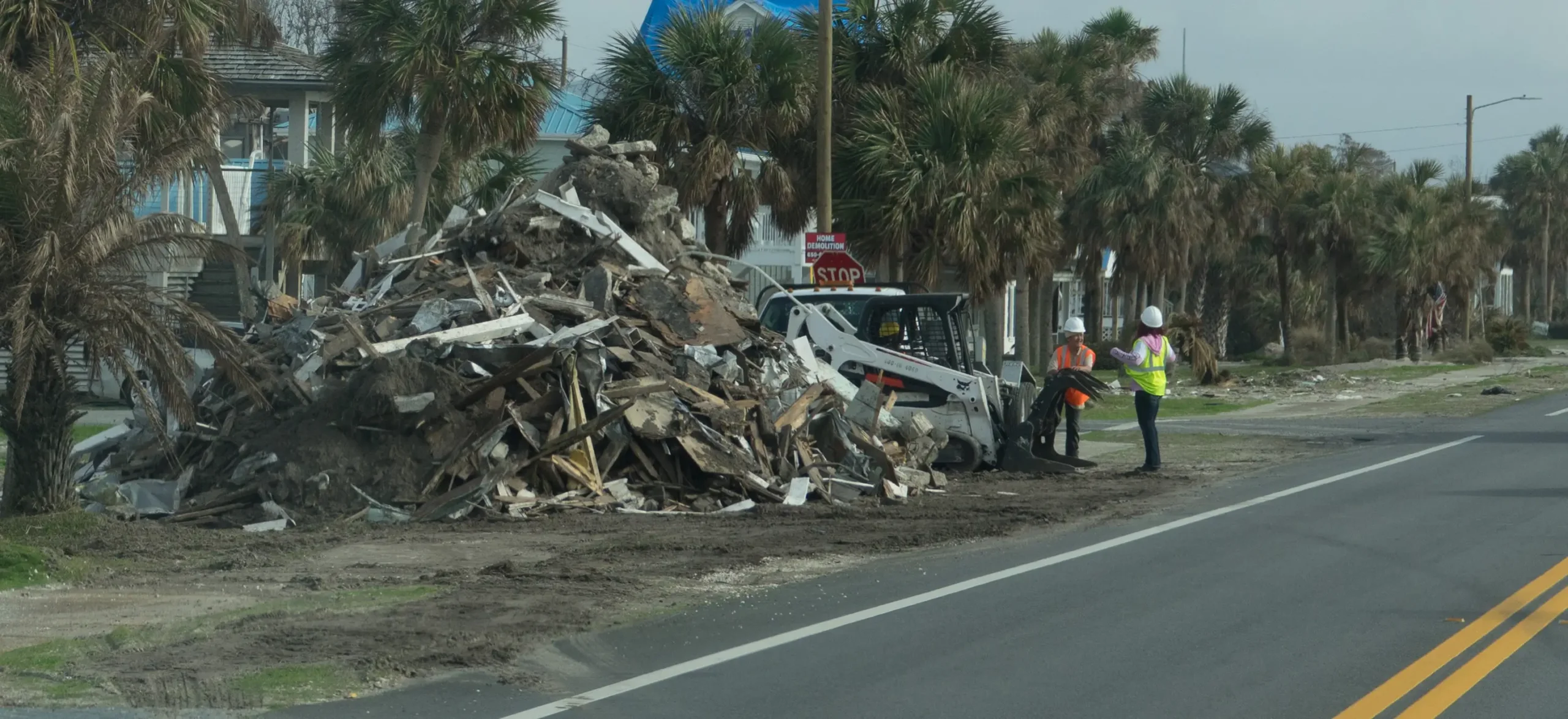
For heavier material or a wide cleanup area, heavy equipment rentals may reduce manual handling. A skid steer can help gather and relocate loose debris on a suitable site, while a mini excavator can support digging or more controlled material handling. Operators should be trained for the machine, the work zone should be separated from bystanders, and the ground must be evaluated before equipment enters soft or washed-out areas.
Access Equipment for Exterior Repairs
Storm repairs often involve siding, soffits, gutters, windows, roofs, signs, or exterior building systems. Short, light work may only require a properly sized ladder rental. Longer work across a wall or facade may be better suited to scaffolding rentals, while targeted work at height or around an obstacle may call for a lift.
Wind is a major factor in any elevated work. Do not use ladders, scaffolding, or aerial lifts in conditions outside the equipment manufacturer’s limits or the approved site plan. Damaged buildings can also change where and how access equipment may be placed.
A Practical Storm-Cleanup Rental Checklist
- Describe the job by phase: power, water, drying, debris, access, or repair.
- Estimate quantities and dimensions, including water depth, branch diameter, stump size, working height, and access width.
- Identify site limits such as soft ground, gates, overhead lines, buried utilities, slopes, and damaged surfaces.
- Confirm towing, hauling, delivery, fuel, power, discharge hose, and accessory needs before pickup.
- Ask what operator experience, personal protective equipment, and setup steps the rental requires.
- Reserve early when a storm is approaching, but never delay evacuation or other official safety instructions to pick up equipment.
Why Renting Can Make Sense After a Storm
Storm-recovery equipment is often needed intensely for a short period and then not again for months or years. Renting can provide access to a job-specific tool without creating a long-term storage and maintenance burden. It also gives you the flexibility to move from one phase of cleanup to another instead of trying to force one machine to handle every task.
Demand and inventory can change quickly around severe weather. Contact Yesco with a clear description of the work, the site, and your preferred timing so the team can confirm current availability and help you choose an appropriate rental.
Storm Cleanup Equipment Rental FAQs
What equipment is most useful after a hurricane?
The answer depends on the damage. Common needs include a generator for temporary power, a pump for suitable water-removal jobs, air movers for the drying phase, a wood chipper for eligible branches, a stump grinder for remaining stumps, and access equipment for exterior repairs. Start with the first safe task instead of renting everything at once.
Can I reserve storm cleanup equipment before a hurricane?
You can contact Yesco to ask about advance availability and rental timing. Storm demand can change quickly, so discuss pickup, return, fuel, accessories, and what happens if local conditions affect the schedule. Always place evacuation orders and personal safety ahead of equipment pickup.
Where can I rent storm cleanup equipment in Panama City, FL?
Yesco provides local equipment rentals from 1010 East Baldwin Road in Panama City. Call (850) 277-0000 or send the team your project details online to discuss the work and confirm availability.