June 9, 2026
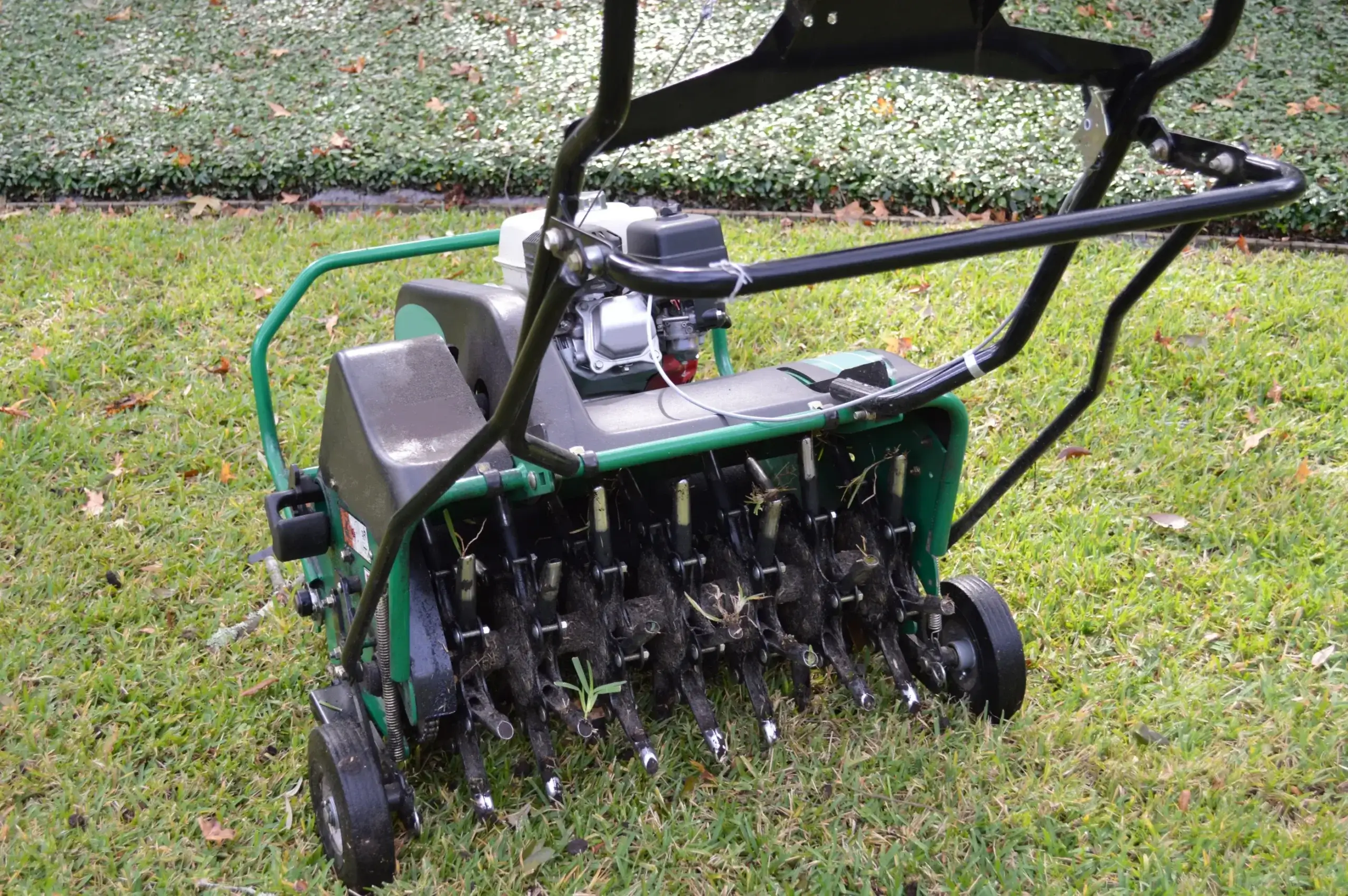
You’re standing in your yard, looking at patchy grass, bare spots, and soil that feels like concrete. You know your lawn needs help, but when you start researching solutions, you hit a wall of confusing advice. Should you aerate? Dethatch? Both? Neither?
Here’s the truth: aerators and dethatchers solve completely different lawn problems, and using the wrong one won’t just waste your time. It could actually make things worse. Most homeowners in the Panama City area deal with compacted soil and thatch buildup at some point, but the fix depends on what’s actually happening beneath your grass.
In this guide, you’ll learn exactly what aerators and dethatchers do, how to tell which problem you’re dealing with, and when each tool makes sense for your specific situation. No confusing jargon, no generic advice, just practical information from people who’ve helped property owners tackle real lawn challenges across Florida’s Gulf Coast.
What’s the Actual Difference Between Aerating and Dethatching?
The confusion starts because both processes involve poking holes or pulling stuff out of your lawn. But that’s where the similarity ends.
Aerating addresses soil compaction. An aerator pulls plugs of soil out of the ground, creating channels that let air, water, and nutrients reach grass roots. Think of it like loosening packed dirt so roots can breathe and spread. The machine removes small cores of soil, usually about half an inch wide and two to three inches deep, and leaves them on the surface to break down naturally.
Dethatching removes excessive dead organic matter. A dethatcher (also called a power rake) uses spinning blades or tines to pull up the layer of dead grass stems, roots, and debris that accumulates between your soil and the living grass blades. When that layer gets too thick, it prevents water and nutrients from reaching the soil, essentially choking out your lawn.
Here’s the key distinction: aeration creates space in compacted soil below the grass, while dethatching removes buildup that sits on top of the soil. One goes down, the other comes up.
If your soil is hard and water puddles instead of soaking in, you likely need aeration. If your grass feels spongy when you walk on it, or you can see a thick mat of brown material when you pull back the grass, you probably need dethatching.
How to Tell Which Problem You Actually Have
You shouldn’t guess which tool you need, and you definitely shouldn’t do both just to be safe. Here’s how to figure out what’s going on with your lawn.
The Thatch Test
Take a small shovel or trowel and cut out a triangular wedge of your lawn about three inches deep. Look at the cross-section. You’ll see green grass on top, then soil at the bottom. Between them, you might see a layer of brownish, matted material. That’s thatch.
A thin layer of thatch (about half an inch) is actually beneficial. It helps insulate roots and retain moisture. But if that layer measures more than three-quarters of an inch thick, it’s blocking water and nutrients from reaching your soil. That’s when dethatching makes sense.
The Compaction Test
Push a screwdriver or a long nail into your soil. If it slides in easily to a depth of six inches, your soil isn’t compacted. If you have to push hard or can’t get it in more than a couple inches, you’re dealing with compaction.
Another sign: water that puddles on the surface instead of soaking in, even when your soil isn’t saturated. Compacted soil has no pore space for water to flow through.
Visual Clues Around Your Property
Compacted soil usually happens in high-traffic areas, like paths where people walk regularly, areas where equipment sits, or spots where heavy vehicles have driven. If your grass is thinning in these zones while the rest of your lawn looks decent, compaction is probably the culprit.
Thatch buildup tends to be more uniform across the lawn. You’ll notice a spongy feeling when you walk, grass that seems to bounce back slowly, and often increased disease or pest problems because the thatch layer stays moist and harbors problems.
When to Use an Aerator (and How It Actually Works)
Aerating makes sense when you’ve confirmed soil compaction, when you’re preparing for overseeding, or when you’re trying to revive a lawn that’s been struggling despite regular watering and fertilizing.
Best Times to Aerate in the Panama City Area
For warm-season grasses like Bermuda, Zoysia, and St. Augustine, which dominate our region, aerate during the growing season when the grass can recover quickly. Late spring through early summer works well, typically May through July.
Avoid aerating during dormancy or extreme heat stress. The grass needs active growth to fill in the holes and take advantage of the improved soil conditions.
What Actually Happens During Aeration
A core aerator removes plugs of soil, leaving small holes throughout your lawn. Those holes immediately improve drainage and air exchange. Over the next few weeks, the plugs on the surface break down and filter back into the lawn, actually helping improve your soil composition.
The real benefit happens underground. Grass roots grow into the new channels, spreading deeper and wider. Water and fertilizer reach the root zone instead of running off. Beneficial microorganisms get the oxygen they need to break down thatch naturally.
You might see immediate improvement in areas where water was pooling. The long-term benefits, like thicker, healthier grass with deeper roots, show up over the next growing season.
Single Pass or Multiple Passes?
For seriously compacted soil, one pass often isn’t enough. Professional-grade aerators can make multiple passes in different directions, creating overlapping hole patterns that thoroughly break up compaction. A good rule: if you can’t easily slide a screwdriver six inches into the soil after aeration, make another pass.
When to Use a Dethatcher (and What to Expect)
Dethatching is aggressive. It tears up your lawn surface and can look pretty rough for a few weeks afterward. That’s why you only dethatch when you actually need to, when thatch buildup is genuinely preventing your lawn from thriving.
Signs You Need to Dethatch
Your lawn feels springy or spongy underfoot. When you pull back grass, you see a dense layer of brown, matted material that doesn’t break apart easily. Your grass struggles to green up in spring even with adequate fertilizer. Disease or fungus problems keep recurring. Water runs off instead of soaking in, even though the soil underneath isn’t particularly hard.
Timing Matters More for Dethatching
Because dethatching is stressful for grass, timing is critical. For warm-season grasses in our area, dethatch in late spring when the grass is actively growing and can recover quickly, typically late April through June.
Never dethatch during dormancy, drought stress, or extreme heat. The grass needs energy to repair the damage, and stressing it further can thin out your lawn or create opportunities for weeds.
The Dethatching Process
A power rake has rotating blades or spring tines that dig into the thatch layer and rip it up to the surface. You’ll end up with piles of dead material that need to be raked up and removed. The lawn will look torn up. That’s normal.
After dethatching, your lawn needs immediate care. Water thoroughly to help the grass recover. Consider overseeding to fill in bare spots. Apply a light fertilizer to support new growth. The grass should start filling in within two to three weeks.
How Often Should You Dethatch?
Most lawns never need dethatching if they’re managed properly. Heavy fertilization, overwatering, and certain grass types can contribute to faster thatch buildup. If you’re dethatching more than once every couple of years, something else is wrong, usually too much fertilizer or irrigation that’s keeping the surface constantly moist.
Can You Aerate and Dethatch at the Same Time?
Technically yes, but it’s rarely the right move. Here’s why.
Both processes stress the grass. Combining them in a single session can overwhelm the lawn’s ability to recover, especially if conditions aren’t perfect or if your grass was already struggling.
If you need both, prioritize based on which problem is worse. If thatch is your main issue, dethatch first. Let the lawn recover for three to four weeks, then aerate. If compaction is the bigger problem, aerate first, then dethatch the following year if thatch buildup is still an issue.
The exception: if you’re renovating a seriously neglected lawn where both problems are severe, you might dethatch and aerate in the same session as part of a full restoration project. But even then, you’re looking at significant recovery time and intensive aftercare.
Renting vs Buying: What Makes Sense for Most Property Owners
Unless you’re maintaining athletic fields or managing dozens of properties, buying an aerator or dethatcher probably doesn’t make financial sense.
The Math on Ownership
A decent core aerator costs $2,000 to $4,000 or more. Professional-grade dethatchers run $1,500 to $3,000. Then factor in maintenance, storage space, and the reality that you’ll use each machine once or twice a year at most.
Most homeowners and property managers rent equipment as needed. You get commercial-grade machines that do the job right, you’re not storing bulky equipment year-round, and you’re not dealing with maintenance or repairs.
What to Look for in Rental Equipment
For aerator rentals, make sure you’re getting a core aerator, not a spike aerator. Spike aerators just poke holes without removing soil. They can actually make compaction worse by pressing soil together around the spikes.
For dethatcher rentals, check the tine or blade depth adjustment. You want to control how aggressively the machine works. Too shallow won’t remove enough thatch; too deep can damage grass crowns and roots.
Common Mistakes That Make Things Worse
You can damage your lawn by using the wrong tool at the wrong time or pushing equipment too hard. Here’s what to avoid.
Aerating dry soil. If the ground is too dry, core aerators can’t pull plugs effectively. The cores won’t come out, or they’ll shatter. Water your lawn thoroughly a day or two before aerating so the machine can pull clean plugs.
Dethatching too deeply. Setting the blades too low can rip into grass crowns and damage the root structure. Start shallow and make multiple passes if needed, rather than trying to get everything in one aggressive pass.
Working on dormant grass. Both processes require the grass to actively grow and repair damage. Working on dormant grass leaves your lawn vulnerable to weeds, disease, and thin spots that never fill back in properly.
Ignoring follow-up care. After aerating or dethatching, your lawn needs attention, including watering, fertilizing, and possibly overseeding. Skipping aftercare wastes the effort and money you put into the process.
Using equipment that’s too small for the job. Undersized aerators or dethatchers that can’t handle your soil conditions mean multiple exhausting passes with mediocre results. Match the equipment to your property size and soil type.
The Real Decision: What Your Lawn Actually Needs Right Now
Most lawn problems come down to compacted soil or excessive thatch, rarely both at once, and even more rarely at the same severity level.
Test your lawn before you rent equipment or hire someone. Take ten minutes to check thatch depth and soil compaction in different areas. That simple assessment tells you whether you need an aerator, a dethatcher, or neither.
If you’ve confirmed you need one or both, timing and technique matter more than which brand of equipment you use. Rent from a source that maintains their machines properly, get clear instructions on operation and depth settings, and don’t rush the job.
Your lawn will tell you if you made the right call. Within a few weeks of aeration, you should see improved drainage and healthier growth. Within a month of dethatching, bare spots should start filling in, and the grass should look more vigorous.
If you’re still seeing the same problems after proper aeration or dethatching, the issue might be something else, like poor soil pH, inadequate fertilization, disease, or irrigation problems that won’t be fixed by mechanical intervention alone.
Need equipment to tackle lawn compaction or thatch buildup?
Yesco carries both the Billy Goat PL1800 core aerator and the Billy Goat PR550H dethatcher, sized for residential and commercial properties at our Panama City location. Give us a call and let’s talk about what’s actually going on with your lawn. We’ll help you figure out which tool is right for your project.